Homeowners' pick for appliance repair across the Ohio Valley
Stove & Range Repair — Book a Visit Today
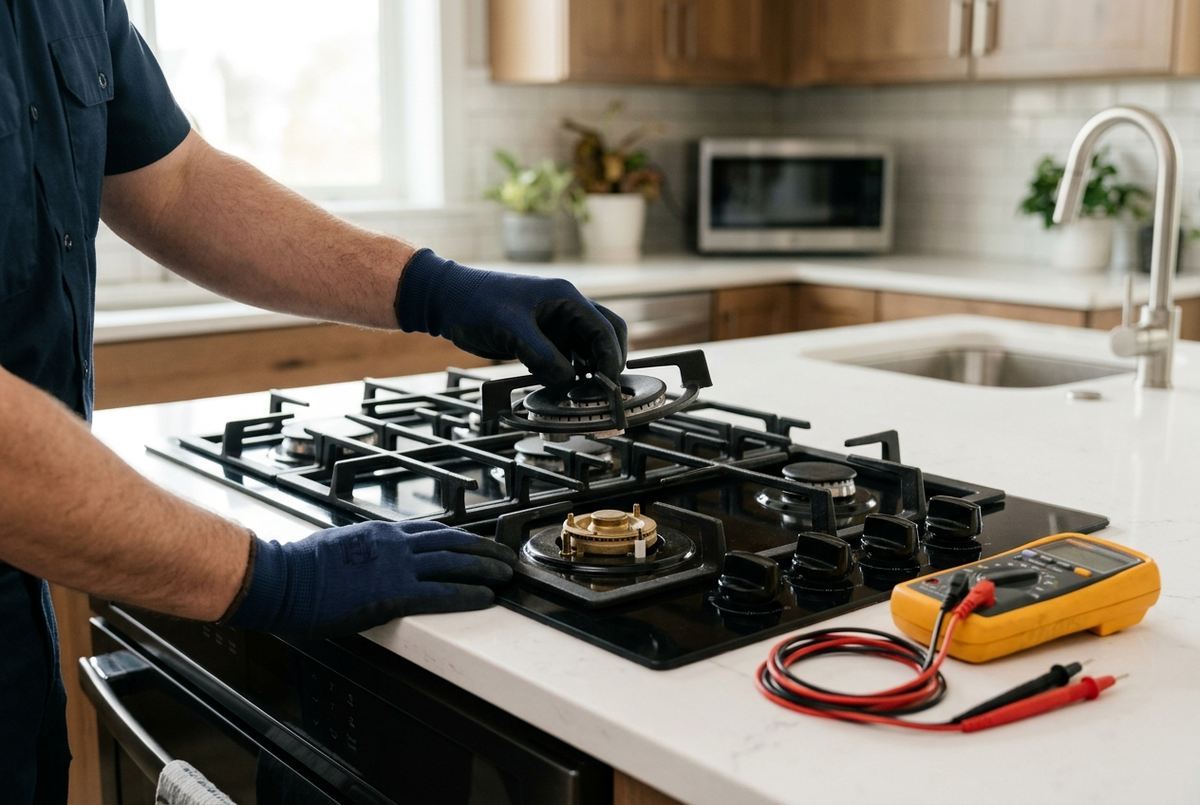
We repair gas and electric ranges, freestanding and slide-in, all major brands, as an independent shop. A range takes more abuse than anything else in the house. Burners boil over, oven doors get leaned on, and spills work down into the igniters and dry there. Most of what we see comes back to a handful of parts: a surface igniter that clicks but won't light, a bake element burned through at a weak spot, an oven sensor throwing the temperature off, a control board that lost a relay, or a door switch that thinks the door is open. A visit starts with your description, then testing at the part itself. Call us and tell us what the stove is doing.
Call (800) 967-1507- You reach a person, not a menu
- Open every day
- The quote comes first, in writing
Taking calls until 5:00 PM ET
The stove & range symptoms we hear most
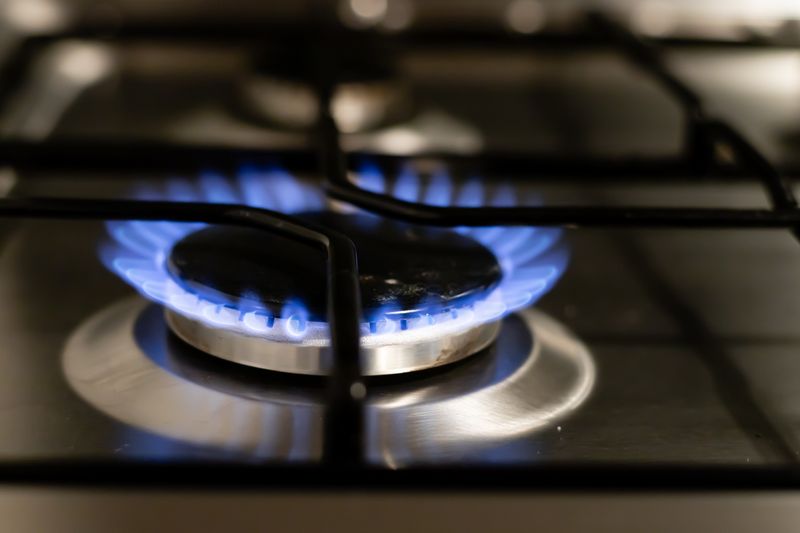
- It clicks and clicks but never lights Fouled igniter electrode, a wet burner cap, or a cracked spark module
- Oven runs way hotter than the dial says Oven temperature sensor drifting, or a control board out of calibration
- Bake side is dead, broil still works Open bake element, or a burned relay on the control
- Front burner only goes high or off Failed infinite switch or a burned surface element terminal
- Smells like gas near the range Loose fitting, worn valve seal, or an orifice issue. Shut it off and call
Safe things to check first
Worth a look before you call — sometimes it saves you the visit.
- 1Make sure the burner caps sit flat and dry in their seats. A shifted cap by itself will stop ignition.
- 2Watch the oven element while it heats and look for a blister, a split, or a bright spot that says it's failed.
- 3Check the breaker on an electric range. Losing one leg of the 240 kills the oven but leaves the lights working.
- 4Pull the racks and confirm nothing (foil, a pan, a stray liner) is blocking the vent or touching the element.
What homeowners get from an independent shop
| JG Appliance Repairs | Big-box repair chains | Handyman listings | |
|---|---|---|---|
| Written quote before any work | ✓ | ✕ | ✕ |
| Live answer seven days a week | ✓ | ✕ | ✓ |
| Every major brand, gas or electric | ✓ | ✓ | ✕ |
| Independent shop, nobody's quota | ✓ | ✕ | ✓ |
| Crews familiar with homes like yours | ✓ | ✕ | ✓ |
After the visit, in their words
“I asked a dozen questions and never felt rushed. The repair held through the holidays with a full house.”
Paula J.Springfield, IL“Their guy caught a kinked drain hose the installer left behind years ago. Dishes finally come out clean.”
Ron E.South Bend, IN“Booked for the washer, and he also tightened the dryer door latch without being asked. No extra line item.”
May L.Portsmouth, VAStove & Range Repair — quick answers
Do you work on gas ranges as well as electric?
Both. Gas ranges bring igniter, valve, and safety-valve problems. Electric ranges bring elements, switches, and terminal blocks. Slide-in, freestanding, or drop-in, the diagnosis goes the same order: confirm the symptom, test the part, then decide on the repair.
Why does my oven take so long to preheat now?
Usually a weak bake element, or a sensor reading high so the control shuts off heat too early. A worn door gasket lets heat escape and adds time as well. We test the sensor's resistance cold, then check the element draw under load.
Is a clicking igniter dangerous to keep using?
Don't keep trying it. Repeated clicking with no flame means unburned gas is going into the room. Turn the knob off, let the area air out, and call us. A wet cap sometimes explains it, but a cracked electrode needs hands on it.
My glass cooktop is cracked. Can that be repaired?
A cracked ceramic top gets replaced, not patched. Stop using it. Moisture and spills reaching the elements underneath create a shock risk. We can source the glass for most models, and we check the elements and wiring while the top is off.
Does self-clean damage the oven?
It can. That high heat is hard on the door lock motor, the sensor, and the control board, and failures often show up right after a clean cycle. If your oven went dead following self-clean, say so when you call. That points us at the thermal fuse and the control first.
How do I know if it's the control board or something simpler?
Boards get blamed a lot and are often innocent. We rule out the cheap stuff first: element continuity, sensor resistance, door switch, wire connections at the terminal block. Only when all of those test good does the board become the likely answer.
How it works
- Step 1
Tell us the symptom
Ring us or fill in the form, then describe the noise, the smell, or the puddle. Brand and rough age help too. Those small details narrow down the part before anyone drives to your door.
- Step 2
We set a window
You get a visit window that fits your day, not ours, and we text when the van is close. Older shotgun houses have tight halls. Tell us where the machine sits.
- Step 3
Diagnose and repair
Our tech tests the machine, shows you what failed, and explains the fix in plain words. Common parts ride in the van. If something has to be ordered, we schedule the return trip before we leave.
- A real person answers
- Open 7 days
- Written quote before work starts
Why homeowners call us
- Hard water is our daily workLimestone water scales heating elements and clogs dishwasher jets, and it crusts up valves until they stick. We see it every week here. So we look past the error code to the mineral buildup behind it, then tell you how to slow the next round down.
- River-valley damp changes thingsHumidity in this valley rusts dryer housings and sours washer gaskets, and it stalls condensate drains. Basement laundry rooms have it worst. We check venting and drainage on every laundry call, because a dry machine stays fixed longer.
- Independent, all major brandsWe work on refrigerators, ranges, ovens, dishwashers, washers, and dryers from every major maker. No brand pays us, and no brand tells us what to say. When we talk about repairing versus replacing, that advice is ours alone.
- Old houses, careful handsShotgun homes and pre-war kitchens come with narrow doorways, soft floors, and odd wiring. We pad thresholds and protect trim, and heavy units move slowly. When we leave, the only change in your house should be a working appliance.
- All major brands, gas & electricIndependent service on Whirlpool, LG, Samsung, GE, Maytag, Bosch, KitchenAid and the rest.
- Straight answersIf it isn't worth repairing, we'll say so, often right on the phone.
Stove & Range Repair
Small faults become big ones on a schedule of their own
Describe the symptoms and we'll book the visit — takes about a minute.
- A real person answers
- Open 7 days
- Written quotes
- All major brands
- Gas & electric
Rather not call? Get a free quote →